Monday, June 04, 2007

Sasa Curcic

Sasa Curcic won Big Brother

Last night, the first Serbian VIP Big Brother finished. And the winner is - Sasa Curcic, former football midfielder.


About Sasa Curcic


Aleksandar "Sasa - Djani" Curcic (born February 14, 1972 in Belgrade, Serbia, SFR Yugoslavia) is a former football midfielder. Known for his eccentricity, Curcic played for OFK Beograd (1991-93), Partizan Belgrade (1993-95), Bolton Wanderers (1995-96), Aston Villa (1996-98), Crystal Palace (1998-99), MetroStars (1999), and Motherwell (2000). He also turned out 14 times for the national team of Yugoslavia, and scored one of the most memorable goals in the history of the Premier League whilst with Bolton. Curcic has been known to sport a shaved head and a fu manchu beard sans moustache. Upon his arrival to Major League Soccer in 1999, he declared his intention to become the "Dennis Rodman of MLS". Curcic's stint in the league, however, lasted only nine games. On 16 March 2000, Curcic joined Motherwell. He only made five appearances for the club, before joining Obilic Belgrade in his native Serbia. In an interview on Sky Sports in April 2001, Curcic stated that he had retired from football. On 5th May 2007, Curcic entered the Serbian Celebrity Big Brother house and 3th Jun he won in VIP Big Brother. He won 50.000 euros prize, and after leaving the house, while he was taking the check, he promised he will spend the money together with other VIP Big Brother housemates in next 12 hours.

I have to mention that in the last 29 days, Sasa Curcic wanted to leave the house twice and he barely decided to stay. Unofficial voting results for final was:
Saša: 158.270 votes
Maca: 28.650 votes
Danijel: 18.393 votes
Olja: 5.193 votes

Sasa Curcic soccer player

Sasa Curcic about Dennis Rodman, fights, prison, cops


I wasn't leader in fight where Dennis Rodman took part. It was very bloody. I was standing in one part of disco club with top-models Helen Kristensen and Eva Herzigova when some Americans started shouting to us. Little provocation, little drink, little freedom and there you go. It finished with scandal. In prison and newspapers.

I was in prison several times and lucky me - I can meditate. I have an klaustrofobia.

I can't stand US cops. Whole that things are money and business. I prefer European cops. There, they are ten times worse.

Curcic testimonial game


Sasa's former football club - Partizan, will organize testimonial game for him. Sasa Curcic would like to see Sten Kolimor, Albert Nađ, Dragan Ćirić, Lotar Mateus, Mario Stanić, Dragan Stojković Piksi and some other soccer players with him in that team.

Here's video with Sasa Curcic and Lombardo, Jansen, Shipperely and Marcus Bent rip Derby apart to give us our first home win of the 1997/98 season. Crystal Palace vs Derby County.


Article about Sasa in US magazine


Many suggested that Curcic was waived due to his love of the 'illegal drugs'.
Sasa Curcic. He of the bald head, spaghetti beard and Buddest tattoos, is no more. No longer will we see his graceful stride through the stadia of Major League Soccer. No longer will the passion of a swift judo kick to a fallen opponent's skull be featured in soccer highlights.

Oh Sasa how could you! We've heard the stories. We've heard the tales. There's so many of them that it's hard not to believe! They say you spent too much time out ravaging the New York nights, galavanting with lady friends and downing a pint or two... or three. We've heard stories that you failed piss tests. Oh Sasa, how could you?

Curcic with beard

And off you'll go, back to Europe where you'll forget about all us. All about MLS. But MLS will never forget you. How could it? How could WE?

What were you thinking? That night when you smoked your doob? That afternoon when you bought your crack? That evening when you poked that prostitute? Did you think about us, your fans? Did you think how it would affect us to see you leave? For you knew it would come to that when you got caught. If you got caught. Did you think of it? Or did it not matter.

Maybe, Sasa, you couldn't help yourself. Maybe you just are what you are. Maybe no league can hope to hold you... to fully have you. You are a free spirit, and so goes your life. Never to settle, never to rot. Never to stay too long in one place. And if that is the case, if that is the way it must be, than happy are those who have been given the chance to see you once... twice... thrice... on the field of play.

Goodbye Sasa, and take care. The world seeks to conquer those like yourself. Don't let them. You must fly... fly... fly away on the wings of the freebird

Friday, June 01, 2007

Women steal sperm

Men accusing women of "stealing" their sperm appeared in a pair of 2005 stories, including that of a Chicago doctor who impregnated herself with her doctor-boyfriend's sperm (from oral sex). (He sued her for theft, but an appeals court called the sperm a "gift.") In a less spectacular lawsuit filed in March 2007 in New York City, Quoc Pham charged that girlfriend Neli Petkova had exploited him to father a baby, and that as soon as she was pregnant, she discarded him, publicly terming him sexually inadequate and allegedly announcing that she had met another man, who "could make her cervix orgasmic just by thinking." Pham wants $1 million and visitation rights to the now-3-year-old.

Saturday, May 26, 2007

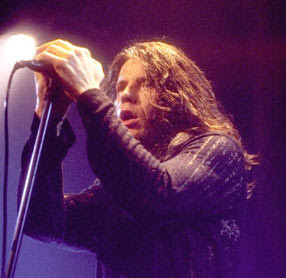
Ian Robert Astbury

Ian Robert Astbury (born May 14, 1962, in Heswall, Cheshire) is an English rock singer and lyricist.
Astbury's career began in 1981, with the gothic rock band Southern Death Cult. At that time, he was going by the name "Ian Lindsay." Southern Death Cult gigged to support its "Moya" single, and secured a slot as an opening act for Bauhaus in 1983. Shortly after that tour, the band split up.
Along with guitarist Billy Duffy bassist Jamie Stewart and drummer Ray Mondo, Ian (now going by the surname "Astbury"), formed a new band, Death Cult and later dropped Death from the name.
The Cult band was one of the most successful British rock bands of the late 1980s and early 1990s. With the 1984 release of their first album Dreamtime, The Cult were the darlings of the Indie post-punk scene, their chart topping "Spiritwalker" single having held at number one for three months. Their second album, Love, evoked memories of 1960s psychedelia such as The Doors, and the Pretty Things. It also featured their now classic hit "She Sells Sanctuary", which introduced them to an international audience. On their third album, Electric, The Cult made a radical transformation to hard rock reminiscent of AC/DC and Aerosmith with the help of Rick Rubin. This further broadened their audience as rock began making a comeback in the late 1980s. Guns N' Roses, who were heavily influenced by Electric, opened for The Cult on their 1987 North American tour, before going on to sell millions of copies of their debut album Appetite for Destruction.
Although The Cult went on to greater heights with their mainstream hit single "Fire Woman," (on the follow up 1989 Sonic Temple album), they began to get criticized by many hardcore fans on artistic merits. Soured on the band's more commercial direction, The Cult were now characterized as pretentious and as having sold out, particularly among their British fan legion. Around this time, Ian Astbury relocated to Los Angeles California. He became friends with The Fuzztones, often jumping up onstage with them at live concerts. One such concert,at Scream in Downtown LA,was recorded and a cover of "The Stooges" song "Down On The Street" was released as a picture disc in the UK on Situation Two Records. It features Ian Astbury on vocals & the "In Heat" era Fuzztones (John Carlucci, Jordan Tarlow, Mike Czekaj & Jason Savall) as his backing band.
The dent in their reputation was amplified by the loss of many Sonic Temple fans, when their next album (Ceremony, 1991) delivered dissapointingly in the wake of an oncoming grunge fad.

Ian Robert Astbury

In 1994, The Cult returned with their untitled album and a musical change of pace. Gone was much of their overblown rock trappings, replaced instead by Astbury's growing interest in electronica and introspective lyrics. To support the album they set out on tour, but in Brazil, Astbury's creative differences with guitarist Billy Duffy reached their peak, and Astbury walked out on The Cult.
Inspired by his sudden change in direction, Astbury immediately assembled another group of musicians and began writing new songs. He called the group The Holy Barbarians, and in 1996 the band released an album, "Cream". Although the Barbarians were not a commercial success, they were well received by many who had regained respect for Astbury as an artist.
Personal difficulties and a drive for further introspection drove Astbury away from his new group, as he began working on a solo album (eventually released as Spirit/Light/Speed), to mixed reviews and low sales.
In 1999, Ian Astbury and Billy Duffy regrouped The Cult to head one of the most financially successful tours that year. A new contract with Atlantic Records was inked, and in 2001 came the release of Beyond Good And Evil. Early radio success was being had by the single Rise, until the band had a falling out with Atlantic and they killed any and all commercial promotions and radio play for BG&E. The fight with Atlantic was described by Ian as Soul Destroying and a disillusioned Astbury, brought The Cult onto another hiatus in 2002.
Having long been influenced by Jim Morrison, in 2002 Ian Astbury filled his hero's footsteps by becoming lead singer in an updated version of The Doors, with original members Robby Krieger and Ray Manzarek, known as The Doors of the 21st Century, renamed in 2005 to become Riders On The Storm. In 2003, Astbury also performed with surviving members of MC5 at the 100 Club in London, before finally reforming The Cult with Billy Duffy again in 2006, for a series of live dates and rumours of reissues and another greatest hits compilation in the works.
2007 THE CULT will enter the studio to begin pre-production on the group's first album since 2001's "Beyond Good and Evil". A Autumn release is expected. Also planned for release is a DVD of the band's November 13, 2006 concert at Irving Plaza in New York City, tentatively due in April.
THE CULT's current touring lineup includes principals Ian Astbury (vocals) and Billy Duffy (guitar) alongside bassist Chris Wyse, drummer John Tempesta (ex-WHITE ZOMBIE, TESTAMENT, EXODUS, HELMET) and rhythm guitarist Mike Dimkich.

Thursday, May 10, 2007

Jack Tramiel - Commodore man

Jack Tramiel is a businessman, famous for founding Commodore International, manufacturer of the Commodore PET, Commodore 64, and Commodore Amiga home computers, and later President and CEO of Atari Corp.
In 1970, Tramiel started work on electronic calculators, and in the early 1970s Commodore became a major supplier of calculators based on a Texas Instruments chip-set. In 1975 TI decided to take over the market, and started producing their own complete calculators which sold at a cost lower than the price of the chip-set alone. This drove most manufacturers out of business, but by this time Commodore had enough of a war chest to survive.
Tramiel started looking for a chip producer to buy, thereby guaranteeing a supply of chips in the future. The obvious solution was MOS Technology, a small company in Pennsylvania that had been set up as a second-source of the TI chips, and was currently struggling with cash-flow problems. MOS was bought in 1976, becoming a part of Commodore.
One of the engineers at MOS was Chuck Peddle, the man who had designed the ground-breaking 6502 chip. Peddle convinced Tramiel that the calculator was a dead-end as a product, that the computer would take over, and that the 6502 was the first in line for success. Peddle showed him a "test system" using the 6502, the KIM-1, and while Tramiel was interested he demanded that Peddle and Tramiel's son Leonard put it into an all-in-one form in time for the COMDEX in six months.
Combining the KIM with a new display driver chip, 4kB of RAM, a version of Microsoft's BASIC programming language, and an all-in-one case including a monitor and cassette tape drive for storage resulted in the PET 2001. At US$599, it became a hit, notably in schools where its tough construction was a major advantage over technically superior machines like the Apple II and Atari 8-bit family, which came out a year later.
Although Peddle left the company in 1980, improvements were made to the platform. In 1980 a new graphics chip with basic color output and a RF modulator for television display produced the Commodore VIC 20, which became a huge seller. In 1982, another new graphics chip, a new state-of-the-art sound chip and 64K of RAM resulted in the Commodore 64 (C64), which was an even more popular and went on to become the best selling home computer in history, with about 22 million units shipped. In 1984, Commodore's sales surpassed US $1 billion.
The success of the C64 was based on a massive manufacturing effort that cost a huge amount of money to set up — borrowed money that should have been easy to pay off in profits on the sales. However, Texas Instruments entered the market, and it appears that Tramiel was so upset about their earlier dealings in the calculator market that he decided to kill them in this one. Publicly declaring "Business is war", he started a price war, with the C64 quickly dropping from US$595 to US$199. While sales continued to skyrocket, profits plummeted, and Commodore's cash flow along with it. It seemed Commodore would soon be in command of a market worth nothing.
By late 1983 Jack and the Board of Directors argued over the direction of the company, which resulted in Jack resigning or being forced out, and several Tramiel loyalists quit Commodore in protest. Jack took a brief hiatus but decided to come back to the computer industry under the claim that he felt no current US computer company was strong enough to compete against the Japanese, who were now moving to enter the US market. So, he formed a new company named Tramel Technologies, Ltd., in order to design and sell a next-generation home computer. (According to Leonard Tramiel, "Our name Tramiel was constantly being mispronounced as 'Tra-meal' and my dad hoped that the other spelling would get people to say 'Tra-mell' (it rhymes with 'done well'). It didn't work."). Several former Commodore employees (including his son Sam and lead Commodore engineer Shiraz Shivji) soon joined him at the new startup, and by March Jack had his new computer design underway.

Wednesday, May 02, 2007

Michael Dell the founder of Dell Inc

Michael Saul Dell (born February 23, 1965, in Austin, Texas) is the founder and CEO of Dell, Inc. Dell is the son of an orthodontist and grew up in a Jewish family. He went to Herod Elementary. He had his first encounter with a computer at the age of 15 when he broke down a brand new Apple II computer and rebuilt it, just to see if he could. Dell attended Memorial High School in Houston, Texas, where he did not excel scholastically. After graduating high school, he attended the University of Texas at Austin intending to become a physician. While at the university, he started a computer company called PC's Limited in his room in Dobie Center.

The company became successful enough that, with the help of an additional loan from his grandparents, Dell dropped out of college at the age of 19 to run PC's Limited, which later became Dell Computer Corporation, then ultimately Dell, inc. Over time, and despite a number of setbacks (including laptops that caught on fire in 1993, temporarily losing the consumer market to Gateway in the mid 1990s, and others), Dell survived the race to become the most profitable PC manufacturer in the world, with sales of US$49 billion and profits of US$3 billion in 2004. As Dell expanded its product line to more than computers, shareholders voted to rename the corporation Dell, Inc. in 2003. On March 4, 2004, he stepped down as CEO of Dell but stayed as chairman of the board, while Kevin B. Rollins, then president and COO, became president and CEO. On January 31, 2007, Michael Dell was reinstalled as CEO of Dell, replacing Kevin Rollins (who resigned earlier in the day).

Accolades for Dell include: "Entrepreneur of the Year" from Inc. magazine; "Man of the Year" from PC Magazine; "Top CEO in American Business" from Worth Magazine; "CEO of the Year" from Financial World and Industry Week magazines. Dell is famous for his eating prowess, and once ate two dozen boiled eggs in a single sitting, earning him the unofficial title of 'The Egg King of Austin.'

Dell resides in Austin with his wife, Susan, and their four children (ages 10 to 14).

On May 15, 2006, The University of Texas at Austin announced a US$50 million grant from the Michael and Susan Dell Foundation to "bring excellence in children's health and education to Austin". The grant will enable the construction of 3 new facilities at the university. The first is the Dell Pediatric Research Institute which is expected to complement the new Dell Children's Medical Center nearby. The second is a new computer science building on the UT campus named Dell Computer Science Hall. The third is the Michael and Susan Dell Center for Advancement of Healthy Living, which is intended to address issues that affect healthy childhood development.

As of 2007, Forbes estimates Michael Dell's net worth at 15.8 Billion, making him the 30th richest person in the world.

In 1998 Michael Dell founded MSD Capital LP, a private investment firm, to invest in various small companies on Dell's behalf. According to reports, the firm tends to invest in "late stage" investments, rather than early in a company's startup.

Dell had a public war of words with Apple CEO Steve Jobs, starting when Jobs first criticized Dell for making "un-innovative beige boxes". On October 6, 1997, when Dell was asked what he would do if he owned then-troubled Apple Computer, he said "I'd shut it down and give the money back to the shareholders." The feud has since appeared to be over as Dell and Apple reached an agreement for Dell's online store to sell iPods. On January 13, 2006, Apple's market cap surpassed Dell's

In 2000, Forbes magazine named Dell Computer Corporation the third most admired company in the U.S. Furthermore, Michael Dell holds the notable distinction of being the computer industry's longest-tenured chief executive officer.

Thursday, April 26, 2007

Early life of Bill Gates

William Henry Gates III was born in Seattle, Washington to William H. Gates, Jr. (now Sr.) and Mary Maxwell Gates. His family was wealthy; his father was a prominent lawyer, his mother served on the board of directors for First Interstate Bank and the United Way, and her father, J. W. Maxwell, was a national bank president. Gates has one older sister, Kristi (Kristianne), and one younger sister, Libby. He was the fourth of his name in his family, but was known as William Gates III or "Trey" because his father had dropped his own "III" suffix. Several writers claim that Maxwell set up a million-dollar trust fund for Gates. A 1993 biographer who interviewed both Gates and his parents (among other sources) found no evidence of this and dismissed it as one of the "fictions" surrounding Gates's fortune. Gates denied the trust fund story in a 1994 interview and indirectly in his 1995 book The Road Ahead.

Young Bill gates

Gates excelled in elementary school, particularly in mathematics and the sciences. At thirteen he enrolled in the Lakeside School, Seattle's most exclusive preparatory school where tuition in 1967 was $5,000 (Harvard tuition that year was $1,760). When he was in the eighth grade, the school mothers used proceeds from a rummage sale to buy Lakeside an ASR-33 teletype terminal and a block of computer time on a General Electric computer. Gates took an interest in programming the GE system in BASIC and was excused from math classes to pursue his interest. After the Mothers Club donation was exhausted he and other students sought time on other systems, including DEC PDP minicomputers. One of these systems was a PDP-10 belonging to Computer Center Corporation, which banned the Lakeside students for the summer after it caught them exploiting bugs in the operating system to obtain free computer time.

At the end of the ban, the Lakeside students (Gates, Paul Allen, Ric Weiland, and Kent Evans) offered to find bugs in CCC's software in exchange for free computer time. Rather than use the system via teletype, Gates went to CCC's offices and studied source code for various programs that ran on the system, not only in BASIC but FORTRAN, LISP, and machine language as well. The arrangement with CCC continued until 1970, when it went out of business. The following year Information Sciences Inc. hired the Lakeside students to write a payroll program in COBOL, providing them not only computer time but royalties as well. At age 14, Gates also formed a venture with Allen, called Traf-O-Data, to make traffic counters based on the Intel 8008 processor. That first year he made $20,000, however when his age was discovered business slowed.

As a youth, Bill Gates was active in the Boy Scouts of America where he achieved its second highest rank, Life Scout.

According to a press inquiry, Bill Gates stated that he scored 1590 on his SATs. He enrolled at Harvard University in the fall of 1973 intending to get a pre-law degree, but did not have a definite study plan. While at Harvard, he met his future business partner, Steve Ballmer. At the same time, he co-authored and published a paper on algorithms with computer scientist Christos Papadimitriou.

Tuesday, April 17, 2007

Kurt Barthel - father of naturism

could be called the father of the American Nudist Club. He began the American League for Physical Culture in 1929 with an ad in the newspaper requesting like-minded folks to join him. Some people say this organization was the evolutionary beginning of the American nudist movement in general and the American Sunbathing Association (now called the American Association for Nude Recreation or (AANR).

He founded America's first official nudist camp, Sky Farm in New Jersey at a time when nudists and nudism were not accepted at all by the American public in the throes of a depression.